

Will F1’s engine compression row be resolved before Melbourne?
In typical Formula 1 fashion, teams are engulfed in controversy before the grand unveiling of the new era at the season opener in Australia. And the stakes are high.

Formula 1’s new era in 2026 had not even started before it was plunged into a complicated technical controversy involving engine compression ratios.
In late December 2025, reports claimed that rival teams accused Mercedes and possibly Red Bull of exploiting a loophole in F1’s power unit regulations.
The row is centred around technical regulation C5.4.3, which states: “No cylinder of the engine may have a geometric compression ratio higher than 16.0. The procedure to measure this value will be detailed by each PU Manufacturer according to the Guidance Document FIA-F1-DOC-C042 and executed at ambient temperature.”
To understand the controversy and its significance, we must first revisit why the current power unit regulations were approved: to attract new manufacturers.
Why F1 has different compression ratio rules in 2026
The power units introduced in 2014 featured a complex energy recovery system that relied on two motor-generator units: an MGU-H and an MGU-K. The MGU-H connected to the turbocharger shaft and harvested electrical energy from hot exhaust gases, effectively acting as an anti-lag system.
This was dropped in the 2026 power unit specification in favour of a more advanced MGU-K unit, which is much easier and less expensive to develop. The FIA also reduced the internal combustion engine’s compression ratio from 18:1 to 16:1 to ease development as F1 shifts towards sustainable fuels.
This refers to the ratio of the cylinder’s maximum volume to its minimum volume. When an engine piston reaches bottom dead centre (its lowest point in the cylinder), the cylinder has its maximum volume. When the piston reaches top dead centre (the top of its stroke), the volume is at its minimum. The compression ratio is the comparison between the two.
An 18:1 compression ratio means the air-fuel mixture is compressed to one-eighteenth of its original volume before ignition. A higher compression ratio brings two key benefits: more power from the same fuel quantity or the same power from less fuel.
This is significant in F1 because fuel flow is restricted, so gaining more performance with fewer resources could be key to securing a significant advantage over rivals.
What is the technical loophole?
Mercedes and Red Bull have reportedly found a clever way to circumvent the explicit wording in the regulations.
The key phrase in C5.4.3 is “at ambient temperature” when measuring the compression ratio. The FIA currently only takes a measurement when the engines are static and not running at racing speeds.
By leveraging thermal expansion, these PU makers have designed components that expand as the engine heats up when out on track. This enables them to increase the compression ratio from 16:1 to 18:1 under racing conditions, resulting in significant lap-time gains.
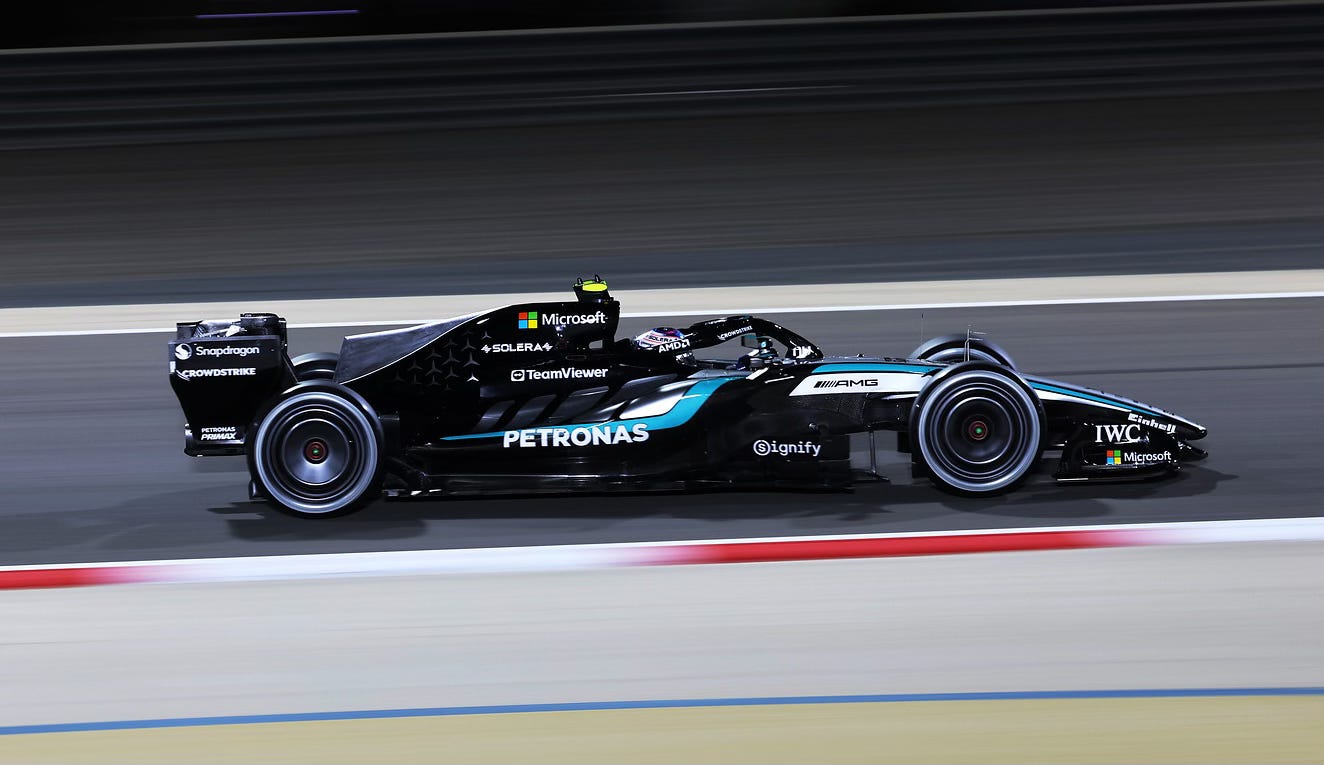
This could have significant implications for the competitive outlook, as Mercedes serves four teams on the grid: itself as a works outfit, McLaren, Williams and Alpine.
FIA single-seater director Nikolas Tombazis confirmed the governing body was looking at the situation and discussing possible resolutions ahead of the first round in Melbourne in March.
“As these engineers are very clever and pushing for an advantage, some have found ways to potentially increase it (compression ratio) when the engine is running hot,” said Tombazis in a video published by the FIA.
“We’ve spent a lot of time with Jan (Monchaux) discussing how to solve these issues, and our intention is to solve them for the start of the season. We don’t want controversy, we want teams to compete on the track, not the courtroom.”
The timeline leading up to Melbourne
In the wake of the first reports about the loophole, the FIA issued a statement.
It was a measured response, noting that the regulations “clearly define the maximum compression ratio and the method for measuring it” and that the procedure will remain the same despite the change in the ratio.
The statement continued: “If necessary, adjustments to the regulations or measurement procedures can be considered in the future.”
The FIA convened a meeting on 22nd January with engine manufacturers to discuss whether the testing framework for compression ratios could be changed to measure under running conditions.
Subsequent meetings also put it high on the agenda, although a solution has yet to be found. With the homologation date for all 2026 engines set for 1st March, any modifications would be difficult to follow up.
Will anyone be forced to make changes?
Conversely, there is an additional supplementary cover-all line in the technical regulations under article C1.5 that states: “F1 cars must comply with these regulations in their entirety at all times during a competition.”
If the Mercedes and Red Bull engines pass the tests but circumvent them while running, doesn’t that fall foul of the rules?
Teams have subverted this regulation before with flexible wings. Cars have exceeded the minimum flex while running at race speed, but have perfectly complied with the rules when tested statically - despite video evidence suggesting the contrary.
There is an element of F1 politik to consider too.
Mercedes team principal Toto Wolff - who has been adamant about the legality of his team’s power unit throughout - referred to the “lobbying” by other manufacturers on the issue that has ramped up in the last few months.
A supermajority in the Power Unit Advisory Committee is required for any intervention. Four of the five engine manufacturers, plus the FIA and Formula One Management.
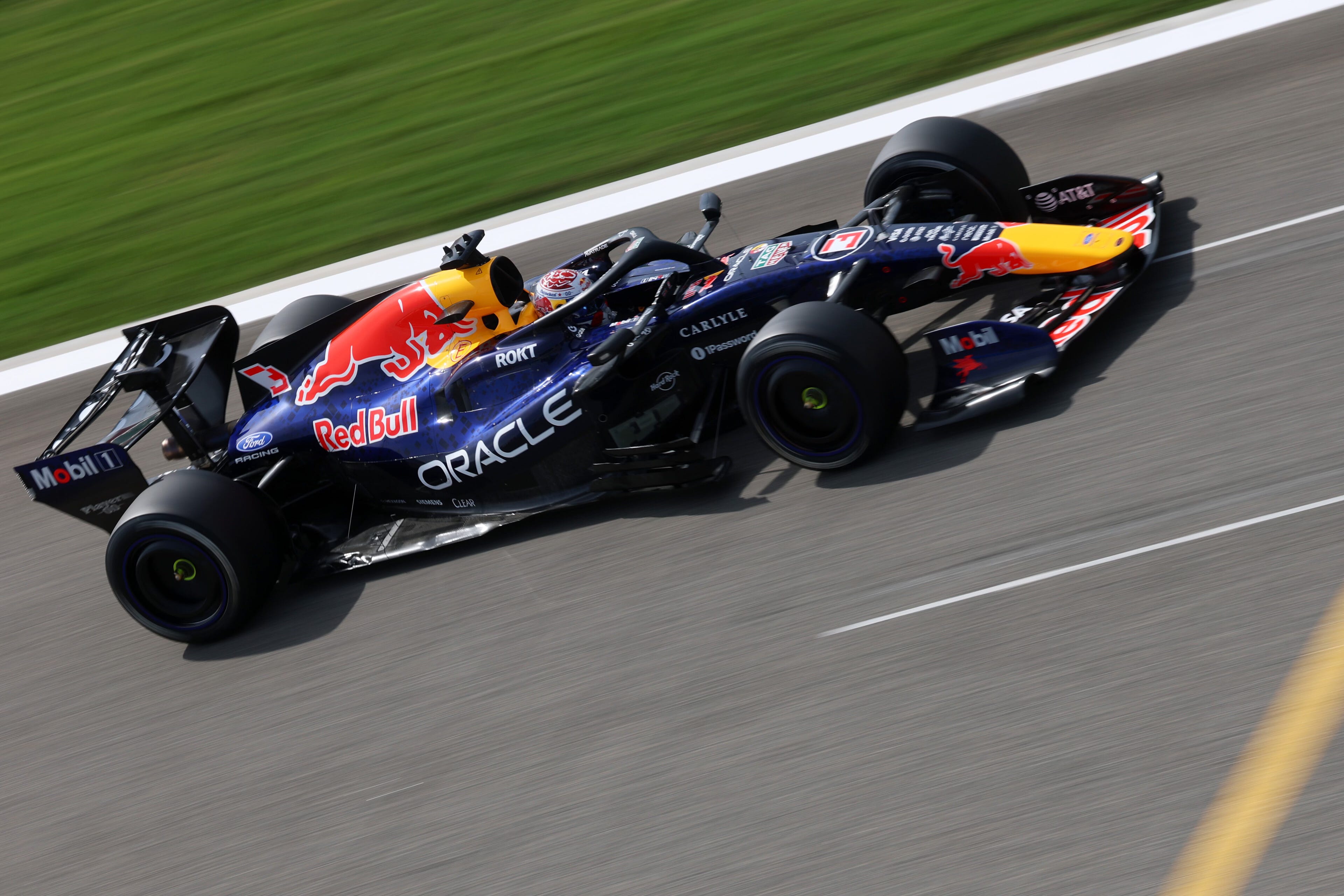
Red Bull has aligned more with the complaints made by rival teams against Mercedes, which would generate the required group of four PU manufacturers. This strategic shift was prompted after Red Bull was reportedly unable to replicate the anticipated performance gains.

This is why Wolff is no longer ruling out any scenario. He has also been drumming up support from Williams team principal James Vowles, his former colleague at Mercedes.
Vowles has been clear that any changes risk F1’s status as a “meritocracy” and questioned how the FIA could implement such a rule: “There are two points. First of all, they have to come up with a regulation. And good luck with them, where you’re testing power units and the conditions you’re trying to run on track.
“The second element of things is, what you do when you have effectively changed the rules that now mean, if we are not legal, that there are eight cars not participating on the grid.”
On the other hand, some in the paddock have been keen to point out that among the opponents is a senior figure who was in charge at Ferrari in 2019 when they received their undisclosed penalty for circumventing the fuel flow meter. Wolff was among those who pressed the FIA for clarification, and therefore could deserve a bit of payback for flagging it up.
The controversy harks back to earlier F1 disputes, notably the 2009 double-diffuser saga. The key difference is lead time: developing an aerodynamic device has a much shorter lead time than changing the PU architecture.
F1’s Additional Development and Upgrade Opportunities (ADUO) system allows struggling manufacturers to catch up if they fall behind, but the 2026 regulations have financial disincentives for introducing additional engines.
A realistic scenario would see rule changes deferred until at least 2027, although Tombazis did reference a new approach from the regulators on the matter.
“We are determined to make this a championship of competition between the best drivers, the best engineers, the teams, but not a championship of rule interpretation.
“We want it to be a championship of engineering prowess as well as driving prowess, but not of just who is a smarter rule interpreter.”
Gaining an unfair advantage has always been par for the course in F1. That’s why you read the rulebook twice: once to see what it says, and again to see what you can get away with.
It would be against the very nature of F1 if ingenious engineering solutions that push the limits of rule interpretation were banned.
Does the desire to make this ruleset a success outweigh this argument? Whatever the answer, this is set to be one of the season’s defining storylines.